| We started testing piles with analogue
equipment in 1980. The technology is quite old now though with
the aid of better computing power analysis of the results obtained for
the test has been improved. We are probably the most experienced non-destructive
pile testing company in the world even though we now concentrate more on
existing structures rather than new piles. We basically stopped counting
the number of piles tested years ago when we crossed the 500,000 tested
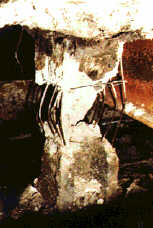
mark! We have tested a large range of pile types with timber piles accounting
for over 50,000 tested. We test other type of structures which can be found
on our homepage Our main site is here.
An older mirror site is here.
|
||
|
||
|
Integrity testing of foundations is a case of common sense plus the reliability of the testing equipment. If you are unsure of the equipment then don't use it, if you do then you have to take the results as being correct. Generally for a pile test analysis, if the toe can be identified then the subsequent analysis will yield all the significant information on the pile condition, shape and capacity. Major problems with similar PDA type testing is that the analysis is curtailed at a fixed arbitrary equivalent depth of the pile and not at the true depth. This leads to mistakes in pile evaluation. |
||
|
||
|
Some results are given |
||
|
||
|
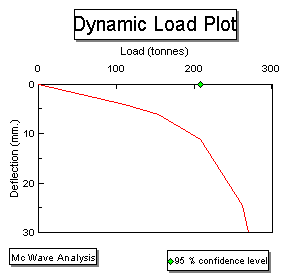
To present the results of the test in engineering terms, we have taken the guesswork out of the analysis by presenting pile models and load plots. The load plot is accurate to10% of a static load test with out the need to drop large weights, explosives or any other large dynamic forces. The equation of motion of the pile is affected by soil parameters, however they can only be considered in the elastic range. If the toe reflection is clearly identified then the captured return wave will contain all the physical information on the pile and pile/soil condition. It is how good the analysis software is in extracting this data which determines the success of the test. Our software analysis package can model piles within and connected to structures, the modeling is useful where complex connections between piles and the structures exist. Applying some basic physics we generate load test plots too!
|
||
 |
||
|
Other parts of the analysis package results are shown . The load test model is good up to the second tangent point from then on its really a mathematical good guess which for clays and cohesive soils is good but for non cohesive soils (sands) the equation of motion of the pile is difficult to define. Theoretically there are too many step functions in the solution equation to make it viable for a short time solution. It is sufficient to say after the second tangent point care has to be taken when using the results. The load model is probably our best selling product and maintains our lead in the pile testing business, Its winning factor is that the element length for normal pile testing is fixed whereas in real life it is variable. We take account of this when analysing results. We have out performed all the major pile testing outfits when it comes to load test predictions and highlighted errors in static load testing tests.
|
||
Its our policy not to publish results less than five years old for privacy reasons. Our plots now include Z-modulus calculation and pile material E value. Our present developments include the geophysical determination of below toe ground condition.
|
For further information, please Email us